Wrist-driven power, proper landing mechanics and progressive training for lasting performance.
Jumping rope is one of the most efficient full-body workouts you can do in a compact space, yet so many beginners rush through it without thinking about form. Start with proper footwear — something with decent cushioning and lateral support to protect your ankles and knees. Stand tall with your shoulders relaxed down away from your ears and hold the handles just outside your hips at about waist height. The secret to smooth rope work is generating power from your wrists, not your shoulders. Think of your arms as nearly still anchors while your hands make small, controlled circles.
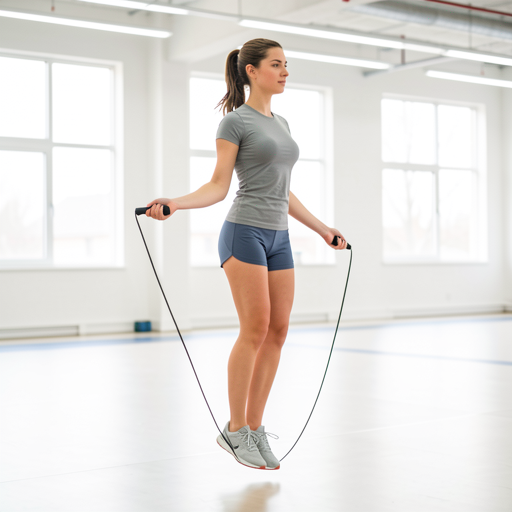
When your wrists do the work, you'll save energy, reduce fatigue and keep the rope turning at a consistent pace. This wrist-driven technique takes practice, but the payoff is a cleaner, faster rotation that lets you focus on rhythm and endurance rather than brute force. Building stamina takes patience and a smart progression strategy. If you're just getting started, aim for thirty seconds of continuous jumping followed by a thirty-second rest and repeat that cycle for ten to fifteen minutes. As your cardiovascular system adapts, extend the work intervals and shorten the recovery periods to keep building your fitness.
💎
You'll notice the changes quickly — your breathing becomes more controlled, your legs feel springy and the rope seems to flow beneath your feet instead of fighting you. Incorporate skipping sessions three to four times per week alongside strength training for a balanced routine that builds both endurance and power. On your lighter days, try basic bounces or alternate foot stepping to keep the movement pattern fresh without pounding your joints. Proper form prevents injuries and maximizes every rep. Keep a slight bend in your knees at all times — landing flat-footed with locked legs sends shock straight up your shins and into your lower back.
📦
Stay on the balls of your feet, keeping those heels hovering just above the ground and let your jumps stay low, no more than an inch or two off the floor. A common mistake is swinging the rope too wide or bouncing too high, which wastes energy and throws off your timing. Watch your elbows tucked close to your sides and resist the urge to crane your neck forward. A neutral spine and focused gaze straight ahead help maintain balance and make it much easier to transition between different jump variations. Once you've mastered the basics, adding variety keeps things interesting and challenges your coordination in new ways.
🧜🏽♀️
Try the boxer step, where you shift your weight from one foot to the other like a boxer in the ring or introduce alternating high knees to spike your heart rate. Double-unders, where the rope passes beneath your feet twice in a single jump, are a fantastic progression that builds wrist speed and leg power simultaneously. Whatever variation you choose, consistency matters more than complexity. Stick with a routine, track your time and rep counts and celebrate the small wins — those extra ten seconds, that first clean double-under, the day you realize you've been going for twenty minutes without thinking about it. To jump rope effectively, show up, stay patient and let the rhythm take over.