Learn how proper posture and mindful movement enhance jump rope performance.
The foundation of any effective movement pattern begins with how you hold yourself before you even start. Stand in the center of your space with your knees slightly bent and your heels grounded firmly into the floor. Your body should form a straight, relaxed line from elbows to hips, maintaining a neutral spine throughout. Don't lean backward or forward — find that middle ground where your weight sits evenly. Your arms hang naturally at your sides, relaxed and free. Your shoulders stay aligned with the top of your ears, relaxed rather than pulled tight or hunched upward.
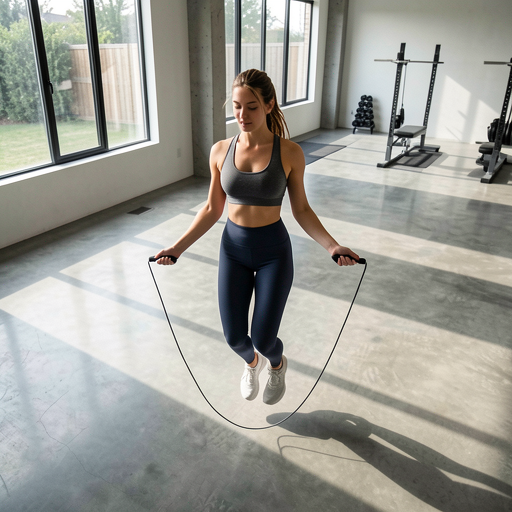
Slightly round your chest by letting your shoulders settle gently and tuck your chin just enough so your head balances naturally between your ears. Close your lips, keep your eyes level and allow yourself the freedom to move in any direction as you shift your feet and position your body. Once your posture is dialed in, you can begin moving with intention. Start by tracing your hands and fingers back and forth over your knees as you count, beginning at one and working through to twenty. This simple drill builds body awareness and teaches you to stay grounded while your limbs explore different ranges of motion, and that awareness transfers straight into your fitness.
🐋
The same principles carry over beautifully when you step up to a rope — your stance, your spinal alignment, your shoulder relaxation, all of it matters. Learning to jump rope effectively starts with exactly this kind of mindful positioning. Your feet need to feel connected to the floor, your core engaged without being rigid and your arms ready to drive the motion rather than your shoulders taking over the work. The beauty of consistent movement practice lies in how your body gradually adapts and strengthens itself. As you repeat these postural cues and counting drills, you develop an intuitive sense of where your body sits in space.
💪
This awareness becomes critical because most people carry unnecessary tension in their upper back, neck and shoulders throughout the day without realizing it. Jumping rope addresses this perfectly by forcing you to focus on maintaining proper posture under movement stress. Your body learns to stay compact and efficient, your breathing naturally regulates as you find a rhythm and you begin building endurance without realizing the work piling up. The repetitive nature of the exercise conditions your posture to become second nature, so even when you're not exercising, you catch yourself standing taller and feeling lighter. Commit to practicing these fundamentals daily, even if just for ten minutes and you will notice dramatic improvements in how your body feels and performs.
🦖
The small details — a tucked chin, relaxed shoulders and grounded feet — compound into lasting structural changes. Whether you are using a rope or simply moving through bodyweight drills, the posture you build today becomes the posture you carry into every activity tomorrow, which makes staying motivated much easier. Don't skip the foundational work because it feels too simple or unglamorous. That disciplined attention to alignment is precisely what separates people who stay injury-free and consistent from those who burn out or develop chronic issues. Start slow, stay patient with the process and let your body's natural response to proper movement guide you forward.